Protected: Frame 02 – Basic Golden Rules of Composition
The Art of Photographic Composition
Photography is the art of translating a multidimensional reality—spatial depth, fleeting time, atmosphere, temperature, and raw emotion—into a single, flat two-dimensional image. Composition serves as the structural language that bridges this gap, arranging visual elements so the viewer can feel those intangible dimensions within the frame.
A photographer’s role is to master these compositional guidelines—such as dynamic balance, leading lines, and proportional grids—not as rigid boundaries, but as intentional choices. By understanding how the human eye moves through an image, photographers can deliberately employ these rules to create order and flow, or intentionally break them to provoke tension, convey raw narrative, and evoke immediate feeling.
Golden Ratio vs. Rule of Thirds
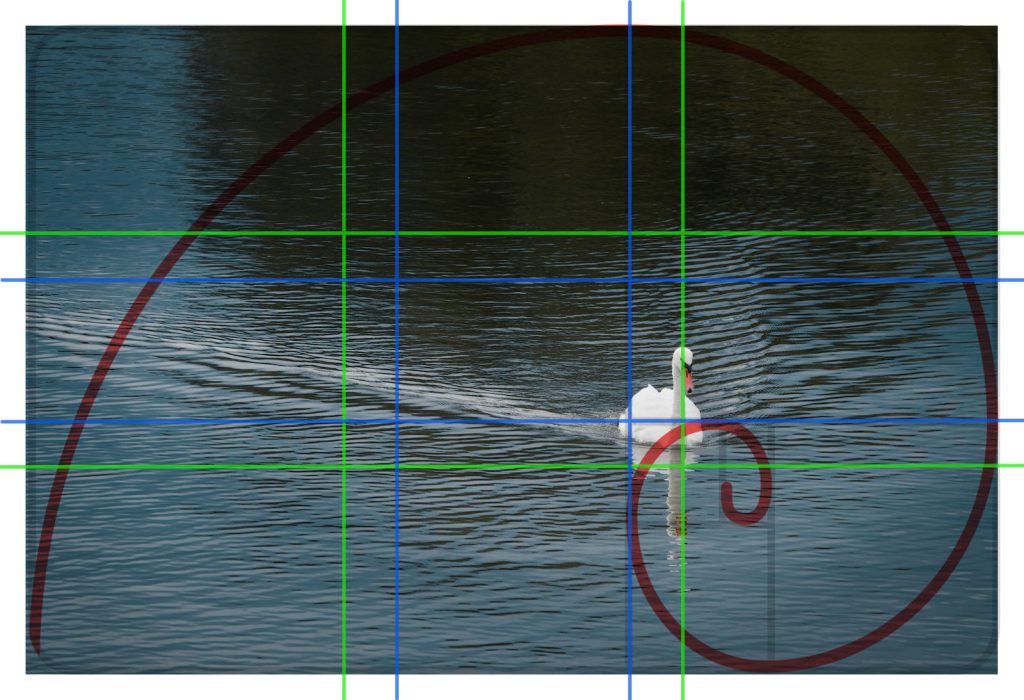
The Rule of Thirds (green) divides an image using a simple 3×3 grid of equal boxes, placing subjects along the grid lines or at their four intersection points to create quick, balanced, and dynamic compositions.
The Golden Ratio (blue) uses a mathematical proportion of approximately 1:1.618 (A:B = B:(A+B)) to establish balance through the tighter grid or the sweeping Fibonacci Spiral (red), drawing the viewer's eye in a continuous, organic curve toward the main focal point.
While the Rule of Thirds offers a straight-forward framework for quick scene organization, the Golden Ratio aligns elements with natural growth patterns to produce a subtler, fluid sense of depth and proportion.

The Language of Lines
Lines are among the most fundamental structural elements in photography, acting as visual highways that guide a viewer's eye through the frame. They establish order within a scene, define shapes, and create spatial depth on a flat two-dimensional surface. Beyond their structural purpose, lines carry strong emotional weight—determining whether an image feels calm and stationary or energetic and chaotic. By intentionally placing or directing lines, photographers can emphasize their main subject, control the pacing of visual exploration, and construct a compelling narrative.
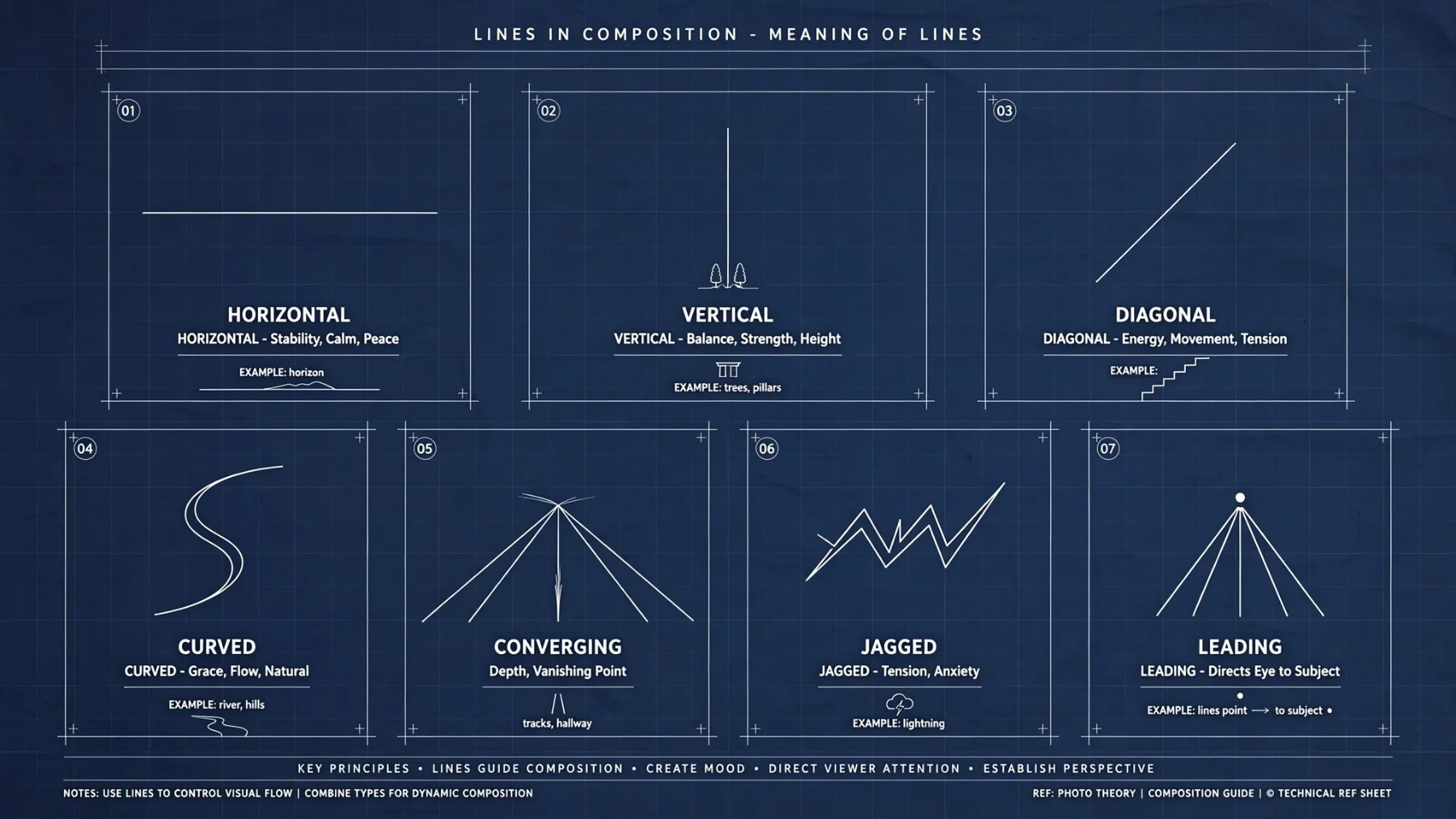
- Horizontal Lines convey stability, tranquility, and rest. They ground the frame and evoke a sense of calm, as seen in flat horizons, quiet water surfaces, or a resting figure.
- Vertical Lines express strength, height, balance, and growth. They emphasize power and permanence, prominent in tall trees, skyscrapers, and architectural pillars.
- Diagonal Lines introduce dynamic movement, energy, and instability. They disrupt static scenes to create visual tension, featured in sloped roofs, ascending staircases, or receding roads.
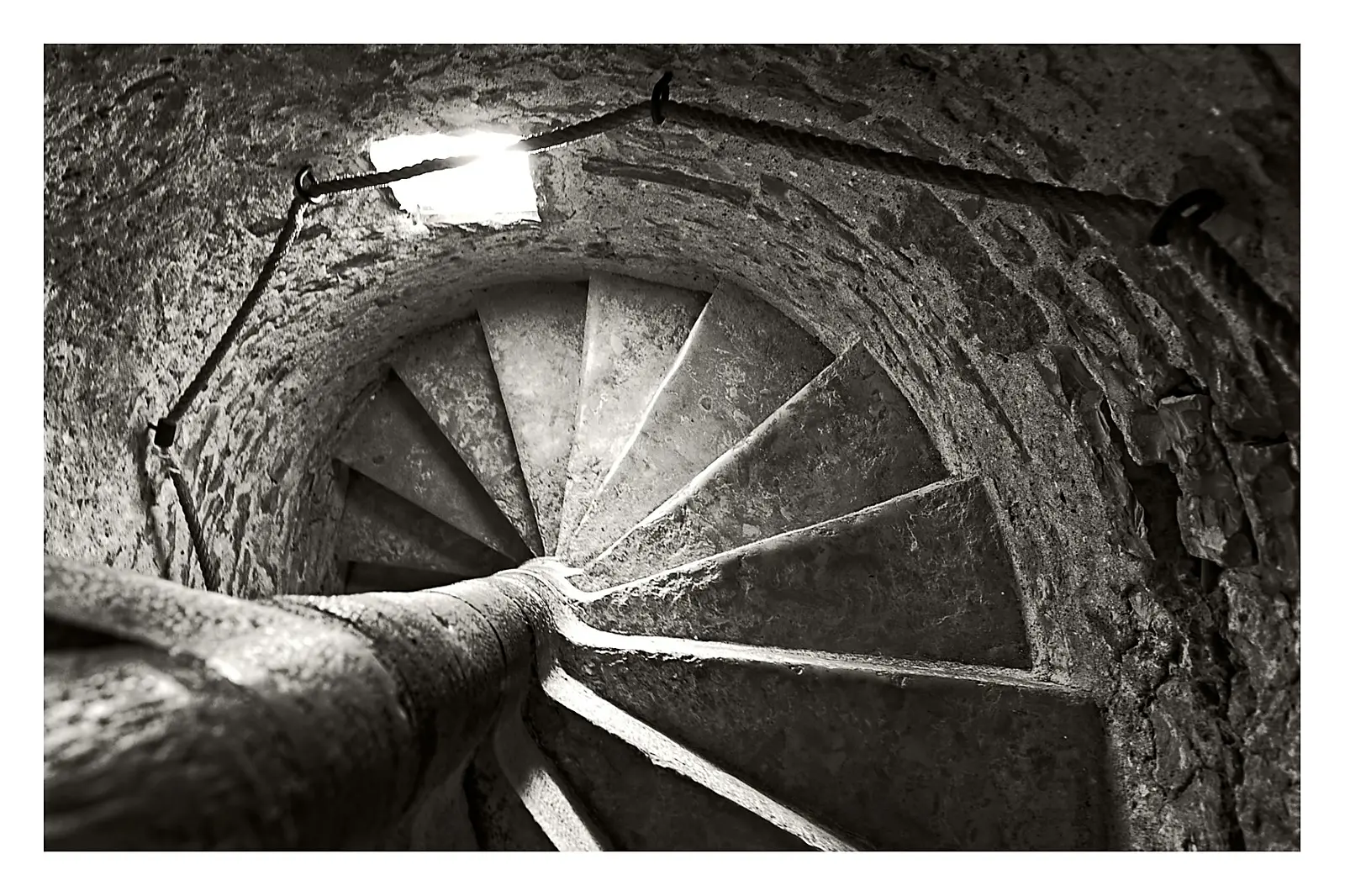
- Curved Lines bring a sense of grace, softness, and organic flow. They guide the eye gently through a frame, found in winding rivers, rolling hills, and spiral staircases.
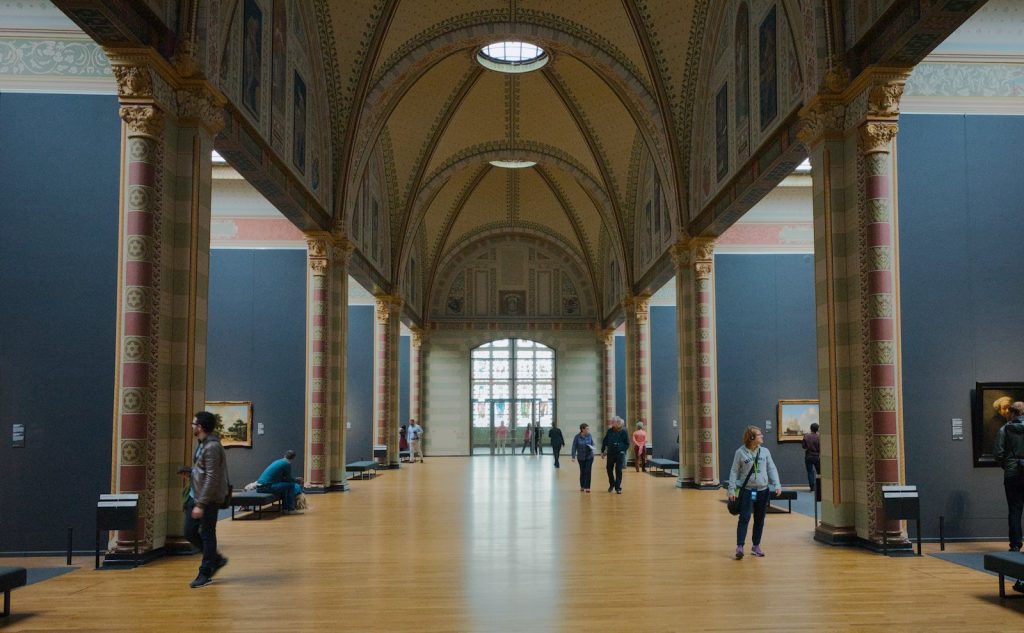
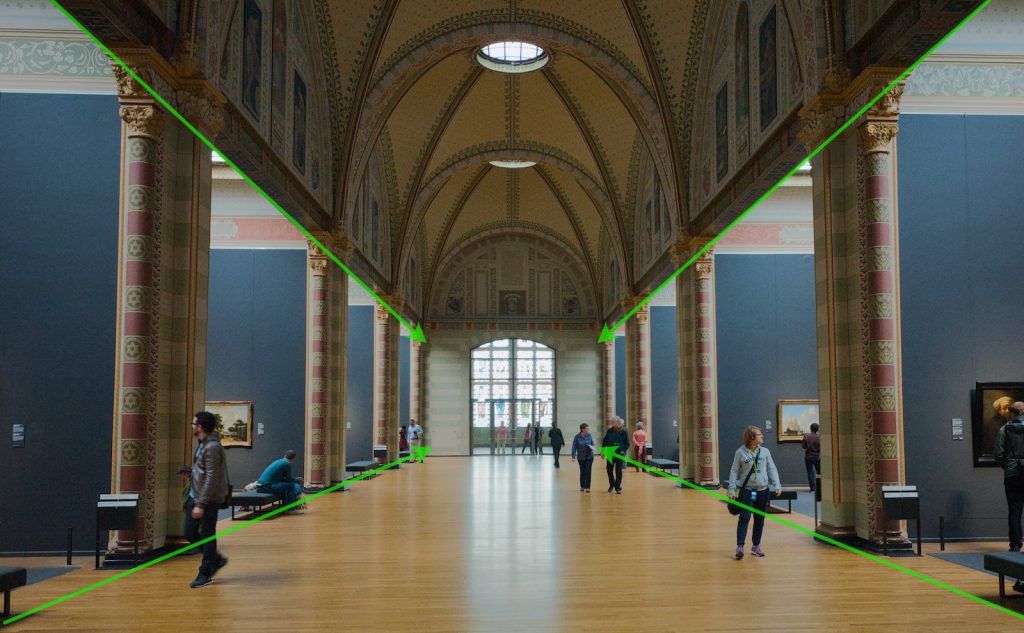
- Converging Lines consist of separate lines that travel toward a shared vanishing point in the distance. They transform flat space by creating a powerful illusion of three-dimensional depth, like railroad tracks or long hallways.
- Jagged Lines communicate anxiety, sudden tension, and unpredictability. Their sharp, erratic directional changes create visual chaos, best illustrated by lightning bolts or shattered glass.
- Leading Lines act as visual pathways, utilizing any physical or implied line within the image to intentionally direct the viewer’s eye straight to the primary subject.
Framing (Frame Within a Frame)
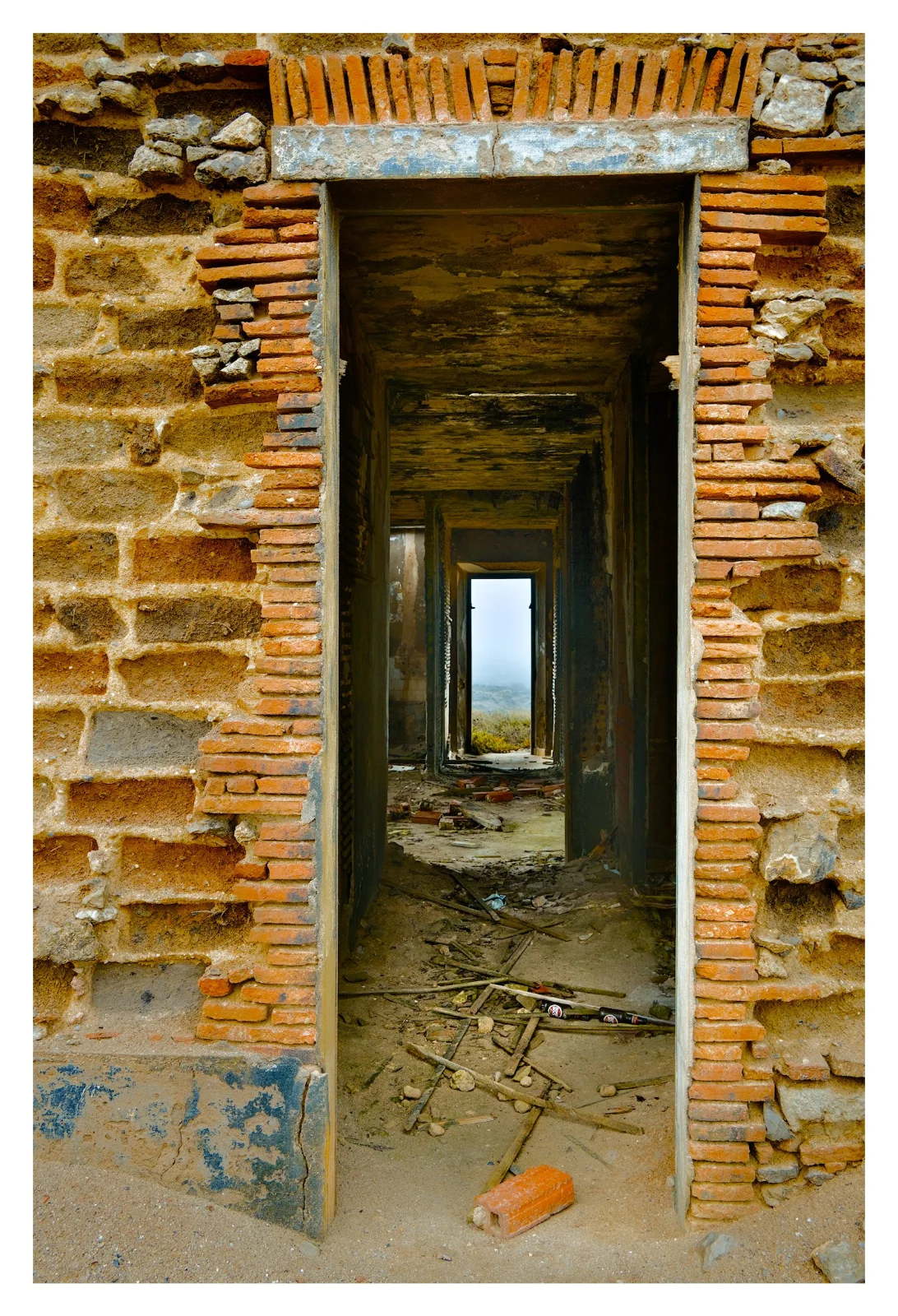
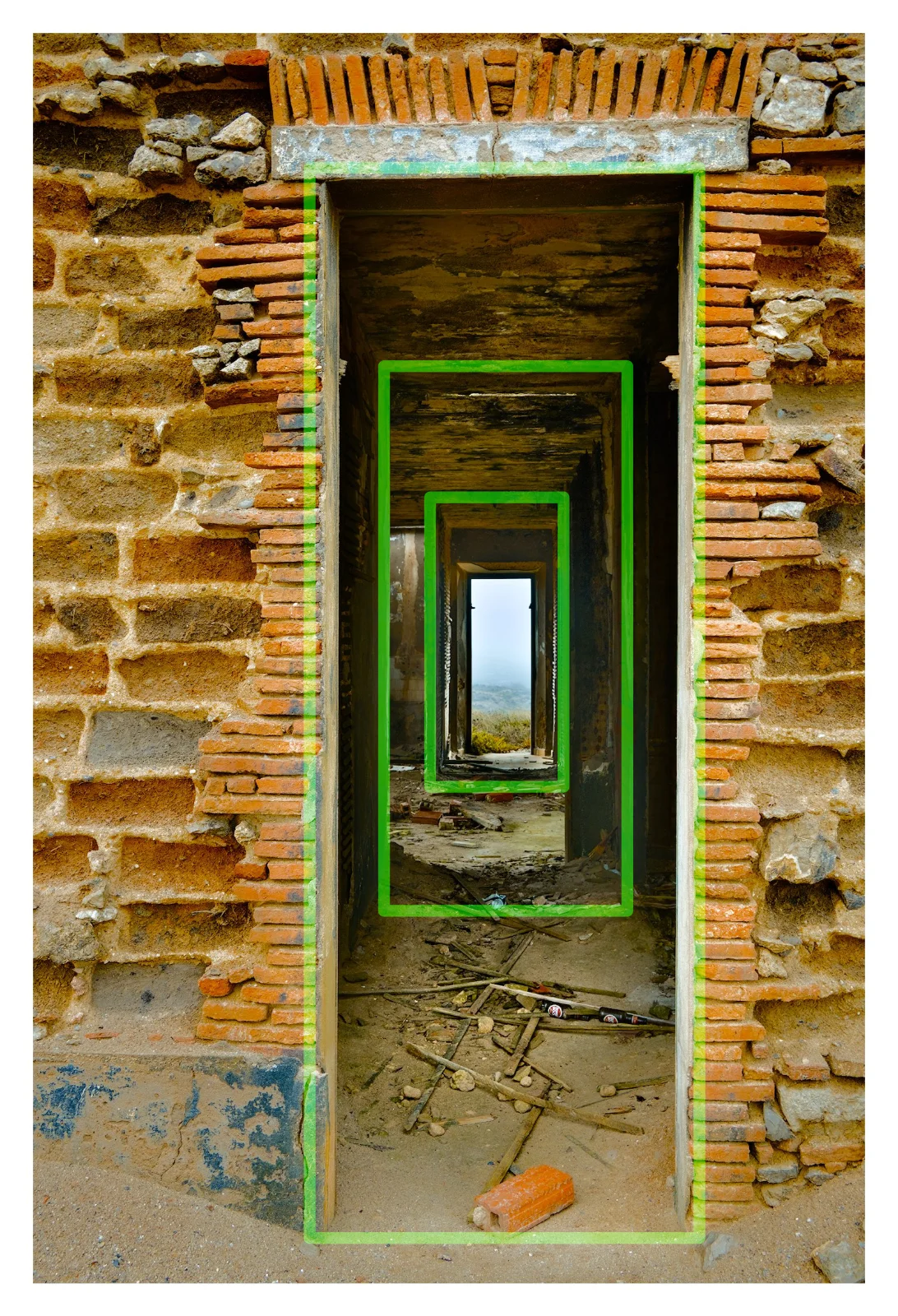
Framing uses natural or architectural elements within a scene—such as doorways, archways, overhanging branches, or windows—to enclose the main subject. A frame does not need to cover all four sides of the image; framing along two or three edges, or even forming a partial arch, effectively isolates the subject without overwhelming the picture.
This technique immediately draws the viewer's eye inward, insulates the subject from surrounding visual clutter, and adds a strong sense of depth to an otherwise flat two-dimensional photograph. It is most powerful when the framing element shares a visual, thematic, or historical connection to the main subject. By establishing this boundary, photographers create a more intimate, structured narrative that invites the viewer to look through the foreground into the story beyond.
Negative Space in Photography
Negative space refers to the empty, uncluttered areas surrounding and between the main subjects in an image. It does not need to be plain white, completely featureless, or out of focus—a textured wall, calm water, or an area of deep shadow can all serve as negative space.
Far from being mere "blank" area, negative space plays an active role in composition: it gives your primary subject room to breathe, prevents visual clutter, and directs the viewer's eye straight to the main focal point. Increasing negative space in a frame can evoke strong emotions like calm, solitude, scale, or mystery, transforming a simple scene into a clean, impactful image.

~ Exercises ~
One Subject, Four Perspectives
Pick a single subject and photograph it using four distinct compositional techniques:
Lines: Experiment with different line types to change the mood.
Framing: Use foreground or background elements to create a frame within a frame.
Rule of Thirds/Golden Ratio: Place the main subject off-center along a 3×3 grid line or intersection.
Silence
Convey quiet, stillness, and spatial calm.
- The Constraint: No literal scenes like a sleeping person, an empty church, or a closed book.
Compositional Tools to Use:
Negative Space: Leave massive areas of clean, uncluttered space in the frame to create visual breathing room.
Horizontal Lines: Emphasize low, flat horizontal lines to anchor the image and evoke rest and stability.
Tension
Create a feeling of anxiety, imbalance, or imminent action.
- The Constraint: No obvious stress signals like clenched fists, cracked objects, or traffic.
Compositional Tools to Use:
Jagged or Intersecting Diagonals: Use sharp angles that slice across the frame to disrupt visual harmony.
Rule Breaking (Off-Balance Edge Placement): Break the rules of "calm" composition.
Tight Framing: Crop tightly around colliding lines or shadows to eliminate surrounding context and create claustrophobia.